The Phone Call That Is Coming to Your Shop
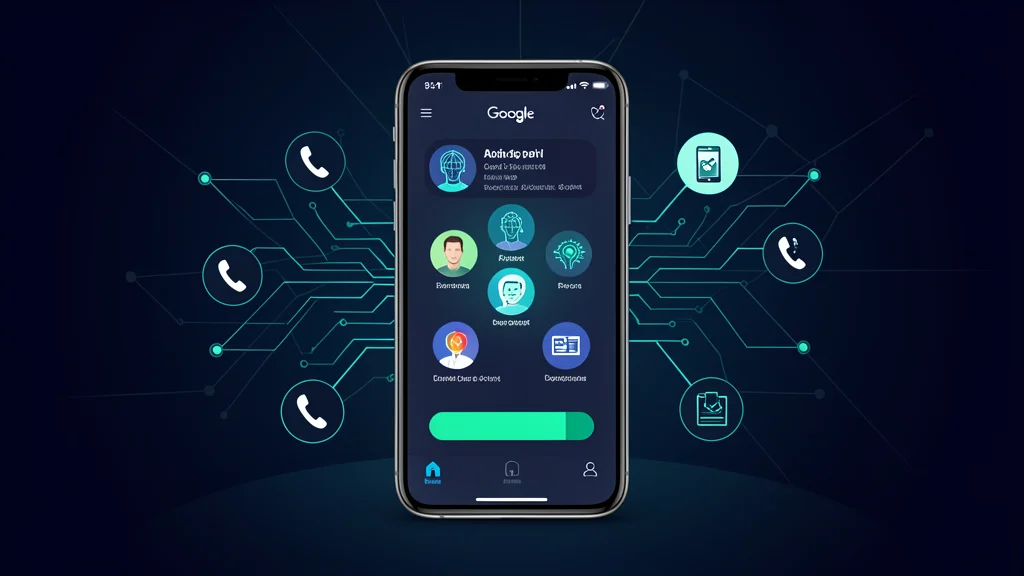
It's a Saturday afternoon. A homeowner's AC stops working during a heat wave. They type "HVAC repair near me" into Google. Instead of seeing a list of phone numbers and calling one manually, they tell Google what they need — and Google calls your company on their behalf.
The phone rings. Your dispatcher is on a job site and can't reach the lines. It goes to voicemail. The Google AI agent notes the unanswered call, checks your Google Business Profile hours (which say you close at 6 PM), flags you as unavailable, and moves on to the next contractor on the list.
That's not a hypothetical scenario. It is how Google announced it will change search for home repair, beauty, and pet care starting this summer. At Google I/O in May 2026, the company revealed that Gemini 3.5 Flash — now the default model in Google AI Mode globally — includes agentic booking capabilities expanded to local service categories. Homeowners can describe what they need, and Google's AI will call businesses directly to gather pricing, check real-time availability, and book appointments.
The phone call between the homeowner and the contractor may never happen at all.
What This Actually Means for Service Businesses
This is the most significant shift in how local customers find trades services in decades. For a service business whose phone line is its primary sales channel, the implications are both immediate and structural.
Every unanswered call now has two consequences. First, the obvious one: a potential customer gets routed to a competitor who answered. Second — and more insidious — Google's AI agent records that your business was unreachable at the time the customer needed help. Future booking attempts by Google's system will factor in that historical availability data. Businesses that consistently miss AI-initiated calls will be deprioritized by the very system homeowners use to find them.
Google Business Profile has become the single most important data source for local discovery. GBP actions — calls, directions, website clicks, and bookings — grew 41% year-over-year according to Google's own 2026 data. AI-driven booking is expanding into categories where phone contact was previously the only option. A business whose profile lists "24/7 emergency service" but consistently delivers voicemail during off-hours risks having that claimed availability contradicted by actual performance data.
The gap between early adopters and everyone else in AI-powered customer service is widening fast. Industry data shows that 62% of inbound calls to small service businesses go unanswered. HVAC adoption of any AI tool reached 26% as of 2026, up from single digits just two years ago. Plumbing AI adoption jumped from 7% to 19%. The contractors who deployed AI phone answering before this shift are already booking emergency calls during hours they previously lost entirely.
Who Is Affected and When
Google's rollout runs from June through August for U.S. consumers. This means the feature could activate in a homeowner's search results any day now, depending on region and user population. The businesses targeted by the initial expansion include:
- HVAC companies (emergency repair and installation, the highest-value use case)
- Plumbing contractors (burst pipes, water heater failures, drain emergencies)
- Roofing contractors (storm damage, leaks, emergency tarping)
- Electrical contractors (power outages, sparking outlets, safety-critical calls)
These are all trades where the phone is literally the cash register — where a homeowner in distress will call the first three companies their search returns and hire whoever answers first. The average emergency HVAC service call values $385 in dispatch plus $1,200 to $2,800 in same-day repair or replacement. A single missed AI-initiated call can represent a $10,000-plus roofing job.
What Google's AI Calls Actually Look Like
Here is how the interaction works from your company's perspective:
A homeowner types "I need a plumber for a burst pipe and I need it today" into Google Gemini AI Mode. The search agent identifies the need in the home repair category and evaluates local plumbing businesses based on GBP data, availability, pricing signals, and review history. It then initiates calls to the top-matched providers.
The AI agent asks questions designed for a booking scenario: confirmation of service area, estimated arrival time, upfront pricing or after-hours fee structure, and real-time technician availability. The answers flow back to Google, which surfaces the best match on a single screen for the homeowner to confirm.
If your phone system picks up within one ring and the person (or AI agent) on the other end is speaking in clear, professional terms — and can check live scheduling — that call has a very high probability of converting into booked work. If it reaches voicemail, or rings unanswered for more than a few rings, Google's agent records the failure and routes away.
Why Traditional After-Hours Strategies Fail Here
Most service businesses have already tried to solve their after-hours answering problem through conventional means. None address the structural gap this new reality creates:
Traditional answering services charge $1.50 to $4 per minute during peak emergency hours — exactly when call volume is highest and costs are greatest. They use human operators who may not know industry-specific vocabulary, can't integrate with dispatch software in real time, and still have the same capacity limitations as the primary office.
A full-time receptionist costs $35,000 to $55,000 annually while covering roughly 45 hours out of 168 — meaning they're unavailable for about two-thirds of every week. A business claiming "24/7 availability" on Google Business Profile but staff-only during the day is creating a liability, not a competitive advantage.
Voicemail has a near-zero callback rate. Research consistently finds that less than 3% of callers who reach voicemail leave a message — and those who do rarely call back within the window that matters for emergency services. When Google's AI agent delivers a customer to voicemail, it records that as unreliability.
Rotating on-call schedules create coverage gaps. They depend on someone being awake, available, and able to answer their cell phone during an emergency — all at 2 AM. And they don't solve the daytime overflow problem when six homeowners call simultaneously from a Google search.
What Service Businesses Should Do Before July 1
The window before this rollout fully activates is narrow but actionable. Here is what positions a trades business for success:
Audit your current call capture rate. Pull phone system logs for the last 30 days. Count total calls received versus missed. Check how many arrive outside standard business hours versus during peak daytime when dispatchers are running jobs. The gap between answered and missed is your immediate revenue opportunity — and Google's AI agents will soon amplify that gap's financial impact.
Verify your Google Business Profile matches reality. If the profile claims extended or 24/7 availability, ensure there is actual phone coverage during those hours — not just a forwarding number that rolls to voicemail. Google explicitly notes that an "24/7" listing receiving voicemail at 11 PM causes the AI agent to flag the business as unreliable, which degrades future booking visibility.
Implement real phone coverage, not just technology theater. An AI voice agent that answers on the first ring — with trade-specific vocabulary, actual dispatch integration, and live calendar access — is the only practical solution at scale. During a heat wave or storm event when call volume triples or quadruples, the capacity to handle unlimited concurrent calls isn't nice-to-have infrastructure; it's a revenue preservation measure.
Prepare your team for AI-mediated customer interactions. The new five-question phone script that Google's AI uses includes: emergency assessment, service availability window, pricing expectations, location confirmation, and scheduling preference. Train dispatchers and front-desk staff to answer efficiently and professionally — every seconds counts when the caller is an automated system evaluating competitiveness.
Start measuring ROI against the right numbers. For a typical HVAC company losing $45,000 to $120,000 annually on missed calls (industry data from ServiceTitan and field audits), the investment in AI phone coverage pays back in days rather than months if it recovers even 40% of previously lost emergency bookings. Each captured after-hours call generates not just a single service ticket but a lifetime customer relationship valued at $3,500 to $5,000 for maintenance-club members.
The Bigger Shift: AI Intermediaries Are Coming
This Google announcement is the first publicly confirmed wave of AI-mediated service booking at scale. The trajectory extends well beyond home repair — beauty, pet care, and local experiences are next. As AI search agents become the default way consumers discover services, the businesses that answer those AI-initiated calls professionally will compound their advantage through better GBP data, stronger availability signals, and higher booking rates from a channel that is growing 41% year-over-year.
Businesses that do not answer effectively face a compounding disadvantage: fewer bookings from AI agents, weaker GBP performance signals, lower visibility in AI-generated local results, and declining organic search traffic as AI Overviews reduce traditional click-through by nearly 60% on queries where they appear.
What to Do Today
The rollout is already underway. The question for any service business is not whether to adapt but what concrete steps to take immediately:
1. Test your after-hours phone coverage right now. Call your own business line after 8 PM and on Sunday morning. Answer rate matters more than any marketing spend when Google agents route calls.
2. Review your call-to-booking conversion. If every answered call converts at the same rate but you're only answering 30% of them, doubling your answer rate effectively doubles your booked customers from the same marketing investment. That's a math problem that gets solved by capacity.
3. Look at an AI voice agent as revenue insurance. Not a chatbot. Not a website widget. A real voice-based system that answers phones in your business name, understands trade-specific terminology, books appointments into your dispatch software, and captures leads whether the caller is human or machine. For HVAC, plumbing, roofing, and electrical businesses operating on thin margins with seasonal cash flows, that certainty — every call answered, every lead captured — is the difference between surviving peak season and profiting from it.
\n
\nProconnAI builds AI voice agents designed for exactly this moment. Start a free trial — no credit card required — and see what your current phone coverage looks like under the same conditions your future customers will use to reach you.
\n
\nProconnAI is a Service-Disabled Veteran-Owned Small Business committed to making AI accessible to small and medium businesses as a practical tool, not a buzzword.